
When buyers evaluate an LED display, module design matters as much as pixel pitch or brightness. Standard SMD technology is widely used because LEDs are mounted directly onto the circuit board, creating compact display modules. A surface mount right angle LED solution adds another consideration: how the package, module, cabinet structure, and joining method work when two display faces meet at a corner.
“Right angle” should not be confused with a different LED emission technology. SMD describes the mounting approach, while right-angle construction describes the physical orientation or display configuration. For buyers, the key question is whether the architecture is engineered for the intended viewing geometry.
How Is LED SMD Right Angle Different From Standard SMD?
A conventional SMD LED display is generally built as a flat viewing surface. Its LED packages face the primary audience, and cabinets connect edge to edge to form a larger planar screen.
An LED SMD right angle configuration is designed around a change in display direction. Two display surfaces can meet at approximately 90 degrees, allowing content to continue visually around a corner instead of stopping at a flat edge. The result can integrate digital media with columns, architectural corners, retail structures, exhibition features, or other spaces where a conventional flat wall is restrictive.
For professional buyers, the distinction is practical. A standard SMD panel may need additional structures or custom fabrication to create a perpendicular display, while a right-angle-capable system is developed with the joining method considered from the start. Successful deployment still requires accurate alignment, compatible cabinets or modules, suitable content mapping, and careful installation.
Why Does Perpendicular Configuration Matter?
The main advantage of a perpendicular LED display is visual continuity. Instead of treating a corner as a boundary between two unrelated screens, designers can create a connected digital surface across two planes. This makes the display more adaptable to three-dimensional spaces and can increase useful visibility from multiple directions.
This configuration can be valuable in environments where audiences move rather than remain directly in front of a screen. Retail stores, showrooms, events, exhibitions, and architectural installations may benefit from content that remains visible as viewers change position. The exact visual outcome depends on viewing distance, cabinet dimensions, corner geometry, pixel pitch, and calibration.
Right-angle construction can also avoid forcing a flat rectangular screen into an unsuitable space. For integrators, the display can become part of the site design rather than an object added afterward. Buyers should nevertheless evaluate the complete mechanical and control system instead of selecting a right-angle feature in isolation.
What Should Buyers Check Before Choosing a Right-Angle System?
Start with the mechanical specification. Ask how the manufacturer forms the 90-degree connection, what cabinet or module dimensions are supported, how the corner is aligned, and how maintenance is performed. A strong design should address flatness, structural precision, access, and repeatable installation, because small discrepancies can become visible at a high-resolution corner.
Next, review image performance. Pixel pitch determines detail potential, while refresh rate, grayscale performance, brightness, color consistency, and calibration influence the finished image. For indoor applications, excessive brightness is not always desirable. Buyers should match optical characteristics to ambient lighting and viewing conditions rather than comparing specifications in isolation.
Finally, confirm how the product fits the larger project. Consider signal architecture, content mapping, mounting, power, service access, and spare-part strategy. A right-angle screen is a system, not just a differently shaped panel, so procurement depends on matching product design with the installation environment.
How Ledman Approaches High-Resolution SMD Display Design
Ledman’s portfolio includes multiple LED technologies and application-oriented display products, with SMD products alongside COB and other solutions. Their KS Series is an SMD indoor fixed LED display focused on a 16:9 format and high-resolution visual performance. The official product page lists KS1.2 and KS1.5 pixel pitches, suitable for applications where fine detail and close viewing are important.
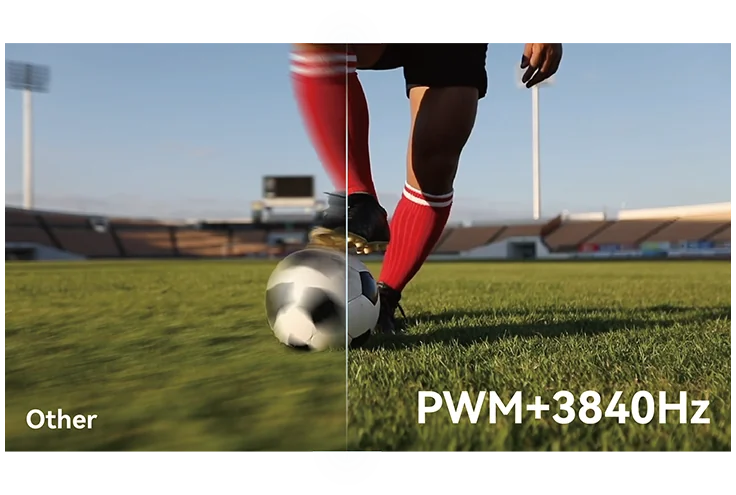
The KS Series supports point-to-point splicing for 2K and 4K resolution. Ledman specifies a standard 27-inch unit, while a 2×2 configuration forms a 54-inch display. The series also uses a high-refresh IC with built-in PWM and a 3840Hz refresh rate, helping reduce scan lines and flicker in captured images.
For physical construction, Ledman states that the KS Series uses a die-cast aluminum structure for high precision and cabinet flatness, with 15 magnetic fixing points on each module to support module-level flatness. The product page also lists front maintenance for modules and control boxes, plus wall-mounted installation.
One Important Product Distinction for Buyers
When evaluating surface mount right angle LED solutions, buyers should distinguish between the LED mounting technology and the physical display configuration. SMD refers to how the LED components are mounted on the PCB, while right-angle capability concerns how display modules or cabinets are engineered to form a perpendicular viewing surface. These are related characteristics, but they should not be treated as interchangeable terms.
A successful right-angle installation depends on more than the LED package itself. Cabinet precision, module alignment, structural interfaces, viewing direction, and content mapping can all affect the final result. Buyers should therefore examine the complete product architecture and confirm how the manufacturer achieves the required 90-degree configuration for the intended application.
This distinction is especially important during project planning and procurement. Rather than selecting a display because it is described as SMD alone, buyers should confirm whether its mechanical design, installation method, and control system support the required corner configuration. This approach helps avoid compatibility issues and ensures that the selected display can deliver the intended seamless visual effect.