
How Lightweight Engineering Can Extend Electric Coach Driving Range Songs
How Lightweight Engineering Can Extend Electric Coach Driving Range Naa Songs Download
Every kilogram carried by a vehicle affects the energy needed to accelerate, climb hills, and maintain speed. For battery-powered passenger transport, the effect accumulates across repeated journeys, making weight management an important part of vehicle engineering.
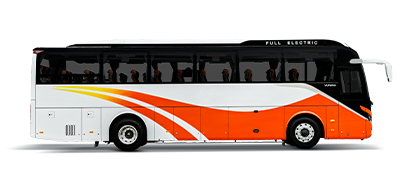
A carefully designed electric coach must balance structural strength, passenger capacity, safety, and onboard equipment while avoiding unnecessary mass. Yutong Bus operates in a sector where improving energy efficiency involves not only battery technology but also the materials and engineering choices that shape the entire vehicle.
How Vehicle Mass Influences Energy Consumption
Vehicle mass has a direct effect on the energy required for acceleration. A heavier coach needs more force to increase speed, particularly on routes with frequent stops or changing gradients. Although energy can be recovered through regenerative braking in an electric vehicle, recovery is not fully efficient, so reducing unnecessary mass can lower the energy spent on repeated acceleration.
Terrain changes the importance of weight reduction. During uphill travel, the powertrain must supply energy to raise the vehicle and its passengers against gravity. On long-distance routes with substantial elevation changes, even a modest reduction in vehicle mass can lower climbing energy demand. Flat highways present a different pattern, where aerodynamic drag becomes increasingly influential at higher speeds.
Passenger load must also be considered when estimating real-world range. A coach carrying a full group and luggage operates under different conditions from one running nearly empty. Fleet assessments should distinguish the vehicle’s unladen mass from its typical operating mass, since the latter gives a more useful indication of energy needs on actual routes.
Materials and Structural Design Strategies
Lightweight engineering begins with selecting materials that offer a useful balance between strength, stiffness, durability, and cost. High-strength steel can allow some structural sections to use less material while retaining required performance. Aluminum alloys and composite materials may provide further mass savings in suitable applications, although their manufacturing methods, repair requirements, and lifecycle costs differ.
Material substitution alone does not determine the final result. Engineers must consider how loads travel through the body structure, how components connect, and how the vehicle responds to vibration and fatigue over years of operation. A lightweight section that requires frequent repairs may create higher lifecycle costs than a slightly heavier, more durable alternative.
Design optimization can also reduce mass without changing the main material. Computer-aided engineering helps identify areas where material contributes little to structural performance, allowing thicknesses, brackets, and component layouts to be refined. For an electric coach, these adjustments must preserve crashworthiness, passenger protection, and body rigidity while accounting for the weight of the battery pack.
Battery Packaging and Whole-Vehicle Weight
In battery-powered passenger vehicles, the battery pack can represent a substantial share of total vehicle mass. Increasing capacity may extend the distance between charges, but it also adds weight that the drivetrain must carry. Engineers must balance energy storage against passenger capacity, luggage requirements, axle-load limits, and the structural protection needed around high-voltage components.
Weight savings in other systems can help offset this burden. Compact electrical components, integrated drive units, and carefully arranged auxiliary equipment may reduce redundant structures and simplify packaging. The benefit depends on the design as a whole: a lighter component is useful only if it retains the necessary durability, cooling performance, and serviceability.
The C11E illustrates the practical constraints involved in electric-coach engineering. Yutong lists this 11-metre battery-electric coach with a 255 kWh battery and seating for up to 50 passengers, depending on configuration. These specifications show how battery storage and passenger capacity must be accommodated within a defined vehicle envelope; the published information does not, by itself, quantify the range gain attributable to lightweight construction.
Measuring the Benefits in Real Operation
Weight reduction should be judged through measurable outcomes rather than the material list alone. Engineers can compare energy consumption, acceleration, braking behavior, and payload under controlled conditions, then validate the results on representative routes. Testing should account for passenger numbers, luggage, road gradients, and ambient temperature to avoid attributing unrelated changes to vehicle mass.
Lifecycle durability belongs in the same evaluation. Some lightweight materials require specialized repair methods or different corrosion protection, while alternative manufacturing processes can affect production costs. Maintenance teams should understand these implications before a fleet adopts a new design at scale, especially if vehicles operate far from specialist repair facilities.
For fleet buyers, the practical objective is not simply to purchase the lightest vehicle available. It is to select a structure that delivers appropriate range and passenger capacity while meeting safety requirements throughout its working life. Yutong Bus operates in a market where those trade-offs are increasingly important as electric coaches take on more demanding routes.
Conclusion
Lightweight engineering can help electric coaches use energy more efficiently, particularly where routes involve repeated acceleration, steep gradients, or substantial passenger loads. Its value depends on careful structural design, battery packaging, material durability, and validation under real operating conditions.
Rather than treating lower mass as an isolated target, operators should assess how it affects range, payload, maintenance, and total cost together. A well-engineered electric coach reflects that balance, with Yutong Bus addressing the practical requirements of battery-electric passenger transport.
Related Music Albums
- Lighting Project Basics: Getting to Know Project-Based LED Strip Lighting
- Liquid-Cooled Storage Cabinets: Why Buyers Source Direct from China
- What Project Buyers Should Know About Custom LED Lighting Solutions
- How Can Sanctuary Seating Be Designed to Maximize Comfort During Long Services?
- Precision Metal Fabrication Reshapes Global Supply Chains
- What Is Surface Mount Right Angle LED Technology? An Explanation for Buyers
- From Technical Seminar to Factory Trial: Turning AM Insights into Action
- Insulator Making Machine: Its Role in More Automated Rubber Manufacturing
- How Much Does SUV Fuel Efficiency Matter for Everyday Driving in South Africa?
- How to Improve Solar Investment Returns Through Smarter Inverter Operation

Need any help?
Contact