Commercial and industrial storage projects require more than selecting battery capacity. Buyers also need to review thermal management, power conversion, system control, installation conditions, and future expansion. China has become an important sourcing market for integrated storage cabinets because many related components and manufacturing resources are available within a mature supply chain.
For overseas installers and project developers, direct sourcing can also shorten communication between the buyer and manufacturer. However, choosing a solar PV supplier still requires careful technical review. Buyers need to understand what is integrated inside the cabinet, how the equipment is tested, and whether it fits actual project conditions.
Why Buyers Consider Direct Sourcing from China
Energy storage cabinets combine several technical systems. Batteries, PCS equipment, electrical distribution, thermal management, monitoring, and safety systems must operate within the same project design. When these components are coordinated during manufacturing, buyers can reduce some of the integration work that would otherwise take place after delivery.
China has a broad manufacturing network for photovoltaic and energy storage equipment. This gives international buyers access to manufacturers that can coordinate batteries, power electronics, cabinets, control systems, and related components during production.
Direct communication is another practical reason for sourcing from manufacturers. Project teams can discuss rated power, energy capacity, communication interfaces, protection levels, and installation requirements before an order enters production. Technical questions can therefore be addressed earlier rather than being left until equipment reaches the project site.
Thermal Management Is a Key Technical Issue
Battery cells generate heat during charging and discharging. Temperature differences between modules can also affect operating conditions within a storage cabinet. For commercial projects with frequent cycling, thermal management therefore deserves close attention during equipment evaluation.
A liquid cooled energy storage system transfers heat through a circulating cooling medium. This approach can provide controlled temperature management for battery modules in high-density cabinet designs. Buyers should examine how the cooling system works with temperature sensors, control logic, and environmental management rather than evaluating cooling technology by name alone.
Local climate also matters. Ambient temperature, cabinet location, ventilation conditions, and operating schedules can influence thermal performance. These details should be discussed before equipment selection because the same cabinet may operate under very different conditions across industrial sites.
Factory Integration Can Simplify Installation
Direct sourcing becomes more useful when a cabinet arrives with major subsystems already integrated. This reduces the need to source batteries, power conversion equipment, control hardware, and protection systems separately. It can also make responsibility for system integration easier to define during procurement.
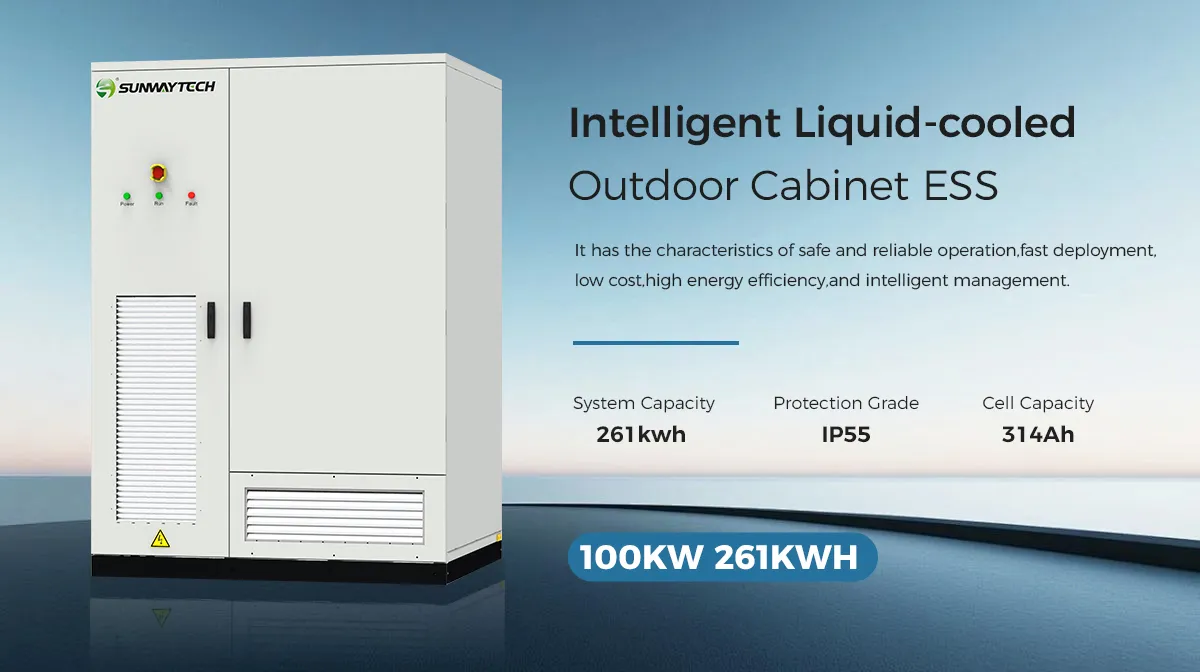
One example is the 100KW 261KWH outdoor cabinet offered by Sunway Solar. The system provides 125 kW rated AC power and 261 kWh energy capacity. It combines LFP batteries, modular PCS, EMS/BMS, power distribution, fire suppression, and environmental control systems within one enclosure.
The cabinet uses intelligent liquid cooling for thermal management and has an IP55 protection rating with transformer isolation. It supports CAN, Ethernet, and RS485 communication. The unit is also factory-integrated, commissioned, and pre-tested before shipment, which can reduce some assembly and commissioning tasks at the installation site.
Pre-Testing Changes the Procurement Process
Factory testing is especially relevant for overseas projects. Discovering an integration problem after equipment has arrived can create additional communication, labor, and scheduling work. Pre-testing allows several system functions to be checked before international transportation begins.
Buyers should ask what tests are completed before shipment and what documentation is provided. They can also clarify how PCS, battery management, communication, monitoring, and protection functions are checked as part of the assembled cabinet.
Pre-assembly does not remove the need for site commissioning. Electrical connections, local protection requirements, grid conditions, and project-specific settings still need to be reviewed at the installation stage. The main advantage is that much of the cabinet-level integration has already taken place in the factory.
Supplier Evaluation Goes Beyond Price
Direct purchasing can reduce layers between a buyer and manufacturer, but price should not be the only reason for this sourcing approach. Technical response, documentation, manufacturing capability, testing procedures, certification, packaging, delivery planning, and after-sales communication can influence the project after the purchase order is signed.
Founded in 2017, Sunway Solar works with photovoltaic modules, solar inverters, lithium batteries, and integrated photovoltaic energy storage solutions. They serve overseas markets and offer products with CE, TUV, and Inmetro certifications. Buyers still need to confirm which certifications apply to the specific equipment and destination market.
Working directly with a solar PV supplier can also help when solar generation and battery storage are planned within the same project. Technical teams can discuss equipment compatibility, project schedules, documentation, and installation requirements through a more direct communication channel.
Scalability Should Be Planned Before Purchase
Commercial energy requirements can change after a project begins operation. Buyers may therefore consider whether the original storage architecture allows additional capacity to be incorporated later.
Modular cabinet design can support this planning, but physical space is only one consideration. Electrical connections, communication architecture, control strategy, local regulations, and site power requirements can influence how future expansion is implemented.
For this reason, project teams should discuss expansion plans during the initial technical review. Even when additional capacity is not required immediately, understanding the possible system arrangement can reduce uncertainty if operating requirements change later.
Why Direct Sourcing Can Make Sense
The reason buyers source liquid-cooled storage cabinets directly from China is not simply equipment price. Access to a concentrated manufacturing supply chain, direct technical communication, factory integration, and pre-shipment testing can make procurement easier to coordinate for overseas projects.
When evaluating a liquid cooled energy storage system, buyers should connect these sourcing advantages with actual project requirements. Thermal management, protection, communication, scalability, testing, and local installation conditions all deserve review. Direct sourcing works more effectively when the manufacturer and project team resolve these details before production and shipment rather than after the cabinet reaches the site.