
Power output alone fails to dictate solar investment returns. Conversion losses, equipment downtime, changing sunlight, maintenance costs, and system sizing can all influence the financial outcome. Selecting a high efficiency solar inverter is therefore only the starting point; operating strategy matters just as much. FRECON provides inverter solutions that can be evaluated from the perspective of energy conversion, protection, and long-term system management rather than headline efficiency alone.
Look Beyond Rated Efficiency
Rated efficiency describes how effectively an inverter converts electrical energy under specified conditions, but real installations rarely remain at one operating point. Solar irradiance changes throughout the day, while temperature, load demand, and DC voltage can shift continuously.
Part-load behavior deserves particular attention because systems may spend many hours below their maximum output. Comparing efficiency across several operating points can provide a more realistic picture of annual energy performance.
System sizing also affects utilization. Excessively oversized equipment may operate inefficiently under light loads, while insufficient capacity can restrict production during strong solar conditions. Matching inverter capacity with the expected generation profile creates a more balanced operating range.
Reduce Energy Losses Across the System
Conversion losses are only one part of the energy equation. Cable resistance, poor connections, shading, module mismatch, and excessive temperature can reduce the electricity ultimately available to the load or grid.
PV string design should account for voltage variation throughout the year. Incorrect string configuration may push voltage beyond permissible limits or prevent the inverter from operating within its most useful tracking range.
A high efficiency inverter can contribute to better energy utilization, but its performance depends on the surrounding electrical design. Appropriate cable sizing, clean connections, balanced PV strings, and sensible equipment placement can collectively have a meaningful effect on annual output.
Use Protection to Protect Long-Term Returns
Financial performance can deteriorate quickly if equipment spends excessive time offline. Electrical faults, overheating, short circuits, and abnormal voltage conditions may interrupt generation and create maintenance expenses.
Protection functions should therefore be considered part of the economic calculation. Fast identification of abnormal operating conditions can help reduce the potential impact of electrical problems, while suitable thermal management supports stable operation under demanding conditions.
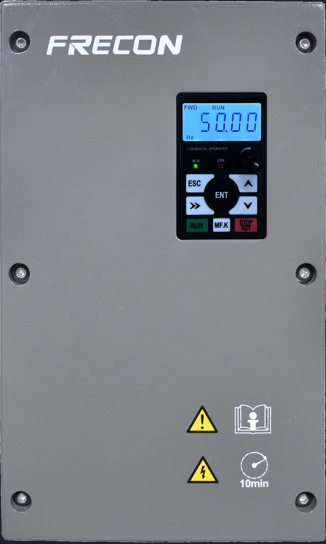
The PV380 Series Solar pump inverter from FRECON includes dormancy and automatic wake-up based on sunshine intensity, along with protection against over-current, over-voltage, phase loss, short circuit, and over-temperature conditions. Its built-in anti-reverse diode also helps prevent current from flowing from the AC/DC bus toward PV modules, adding another layer of system protection.
Manage Operation Around Solar Availability
Solar generation follows environmental conditions rather than a fixed production schedule. Running equipment at unnecessary capacity during weak sunlight can result in inefficient operation, while failing to use available energy during stronger periods can reduce potential output.
Automatic operating strategies can make better use of changing irradiance. Equipment may reduce activity during low-generation periods and resume operation once sufficient solar input becomes available. Such behavior is particularly useful for applications whose loads do not need continuous full-power operation.
Monitoring operating data can reveal patterns that are difficult to identify from monthly energy totals. Output, voltage, current, runtime, and fault records provide useful evidence for adjusting operating schedules and identifying avoidable losses.
Calculate ROI From the Whole System
Purchase price alone does not define inverter value. Installation labor, wiring, maintenance frequency, downtime exposure, expected operating hours, and energy yield should also enter the calculation.
Lifecycle analysis provides a more useful comparison between equipment options. Slight differences in initial cost may become less significant if one configuration offers better energy utilization or reduces maintenance requirements over several years.
A high efficiency solar inverter becomes financially meaningful when its electrical performance translates into additional usable energy and fewer operational interruptions. Investors should therefore compare expected annual energy production rather than relying solely on the efficiency figure printed in a specification sheet.
Conclusion
Improving solar ROI requires attention to the entire energy pathway, from PV array configuration through conversion, protection, load management, and maintenance. Efficiency matters, but practical results also depend on how equipment behaves under changing sunlight and operating conditions. Careful sizing, loss reduction, protection settings, and performance monitoring can make the financial evaluation more realistic.
Selecting a high efficiency inverter should consequently involve both technical specifications and lifecycle considerations. With features such as automatic dormancy, multiple protection functions, and an anti-reverse diode, FRECON equipment offers relevant characteristics for solar pumping applications where energy utilization and operational reliability both influence long-term value.