
Packaging line planning often starts with the required output per shift. The containers entering the line deserve equal attention. Bottle height, diameter, shape, material, and stability affect how loose bottles can be fed and organized. Select a bottle unscrambler machine against the actual bottle range, not only a target speed on a quotation.
Clear product lists help equipment buyers compare capacity with production needs. They also give engineering teams a basis for reviewing handling, changeovers, and connections to filling or inspection equipment. This preparation can prevent a mismatch between the selected machine and the containers used at the plant.
Start with Accurate Bottle Information
Record the dimensions of every planned bottle format. Height and body diameter are basic measurements, while shoulder profile, neck finish, base shape, and center of gravity also matter. Containers with the same nominal volume may behave differently when fed in bulk. List routine and occasional formats, and record how often changeovers occur.
Document the material as well. PET, HDPE, and other plastics can differ in stiffness, surface friction, and resistance to deformation. Glass requires a separate handling assessment because impact and breakage risks affect equipment selection. Buyers should confirm the actual material rather than rely on a product name.
Shape variation needs attention too. Round bottles may behave differently from square, oval, flat-sided, or unusual containers. Handles, narrow necks, and uneven bases can influence movement through the feeding and orientation process. Assess a plastic bottle unscrambler with representative samples from each format.
Set a Realistic Production Rate
Production targets expressed in bottles per minute are useful only when they reflect the whole process. Start with the required good output per shift, then account for planned operating time, cleaning, format changes, and routine stops. This gives the team a realistic operating rate rather than a theoretical peak.
The machines before and after the unscrambling stage must also be considered. The unit needs to supply bottles at a rate that matches the filler or next process. If it runs faster than downstream equipment, accumulation space may be needed. If it runs slower, it can restrict the output of the complete line.
Buyers should distinguish maximum rated speed from sustained production speed. Actual performance may depend on bottle dimensions, shape, material, and line conditions. When comparing a bottle unscrambler machine, request the stated rate for the specific bottle sample and ask how it was measured. One headline figure cannot describe every format.
Review the Feeding and Orientation Sequence
The operating sequence helps buyers judge whether a machine suits their containers. Bulk bottles are loaded into a hopper, and an elevator transfers them toward a positioning station.
Pre-sorting components then guide the bottles before they enter the conveying section. This turns a random supply into a more orderly flow.
Orientation is central to the process. Bottles need to reach the conveyor upright and with suitable spacing for the next operation. Shape and stability can affect how reliably this happens. Equipment discussions should therefore include sample testing instead of relying on dimensions alone.
Compare the Specification with a Real Machine
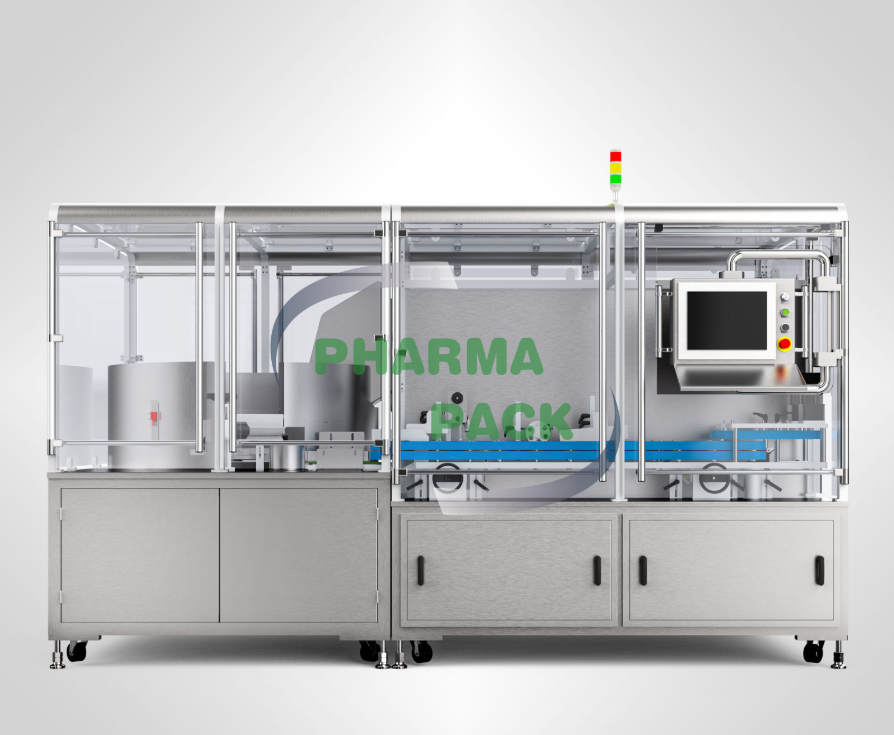
The LFU-25C High Speed Bottle Unscrambler is one example for production planning. Its stated maximum production speed is 250 bottles per minute, with the actual rate depending on bottle size. The supplied description covers bulk feeding, pre-sorting, orientation, spacing, and upright transfer to the next packaging process.
Operators manually load bulk bottles into the hopper. The elevator carries them to the positioning station, where a pre-sorting disc and flexible paddle wheel guide and orient the containers before conveying. Test the plastic bottle unscrambler with the formats intended for the line.
This model is included in the equipment range offered by Pharmapack. They describe their work as covering pharmaceutical packaging equipment and integrated packaging solutions. Their Italian branch has more than 10 R&D specialists, while the Innocentre headquarters has more than 70 senior technical engineers. Their independent development includes an induction seal detection system and a track-and-trace system. Buyers should request model-specific details for requirements not covered by the supplied description.
Prepare a Clear Request for Quotation
Useful quotation requests should include bottle drawings, material information, samples, and the required rate for each format.
Add the planned shift pattern and the machines connected before and after the unscrambling stage. Suppliers can then assess the application against a defined operating brief.
Ask how performance will be checked during a sample test. Use the actual containers and record the achieved rate, orientation quality, interruptions, and operator adjustments. If several formats are involved, test those with the greatest handling differences, not only the easiest container. Test the plastic bottle unscrambler with unusual formats.
Match Equipment to the Production Plan
Sound selection starts with a verified bottle range and a throughput target based on the complete line. Dimensions, material, shape, stability, changeover frequency, and downstream capacity all influence the result. Check the bottle unscrambler machine against the exact formats and line conditions.
The stated 250-bottle-per-minute maximum for the LFU-25C is a reference point, not a universal output promise. Buyers can use bottle samples and line data to establish whether the equipment suits the application. Pharmapack can be included in that technical discussion when evaluating the described model and wider packaging-line requirements.