
Large solar projects often require more than basic power conversion. As photovoltaic arrays grow, system operators need suitable equipment to manage changing solar input, coordinate energy flow, and support stable operation across larger installations. Charge controllers play an important role in this process because they connect solar generation with the wider power system.
For commercial and utility-scale projects, voltage level, array size, expansion plans, and operating conditions can influence controller selection. Understanding how a high voltage solar charge controller works also helps project teams evaluate the role of MPPT without entering complex electrical design.
What a High-Voltage Controller Does
A solar charge controller manages power coming from photovoltaic modules before that energy moves further into the system. In larger projects, higher-voltage arrays can reduce current levels for the same power transfer, which may support more practical system layouts.
The controller needs to respond to changing sunlight throughout the day. Solar output varies because of weather, temperature, shading, and module conditions. A suitable controller helps regulate this changing input so the wider system can receive usable power.
For large projects, the controller is usually part of a broader architecture. It may work with energy storage equipment, power conversion systems, and bypass equipment rather than operating as a separate device.
Project teams therefore need to consider compatibility between major system components. Voltage range, PV capacity, installation arrangement, and future expansion plans should be reviewed together during the design stage.
Why MPPT Matters in Larger Arrays
Maximum Power Point Tracking, commonly called MPPT, helps a solar controller identify an operating point where the photovoltaic array can produce suitable power under current conditions. Because solar conditions change, this point also changes during operation.
Without MPPT, the system may not use available solar generation as effectively across different weather and temperature conditions. MPPT allows the controller to adjust its operating point as the array output changes.
This function becomes especially relevant in larger solar fields where several strings or array sections may experience different conditions. Multiple tracking channels can give designers more flexibility when arranging modules with different orientations or operating characteristics.
A high voltage solar charge controller with several MPPT channels can therefore support more flexible solar array planning. The exact configuration still depends on the project layout and the electrical characteristics of the connected modules.
Multiple MPPT Channels Add Design Flexibility
Larger solar projects may include several PV sections instead of one uniform array. Roof orientation, land shape, shading conditions, or expansion stages can create differences between sections.
Using multiple MPPT channels allows separate groups of modules to be managed with greater independence. This can help project designers organize arrays according to site conditions rather than forcing the entire installation into one operating pattern.
For B2B buyers, this flexibility can matter when projects are built in phases. Initial PV capacity may be smaller, while later expansion adds more modules as energy demand grows.
Parallel capability can also support this type of planning. When several controller units can operate together, project teams have another way to increase PV capacity without redesigning the entire control concept.
How SMC200 Fits Large Solar Projects
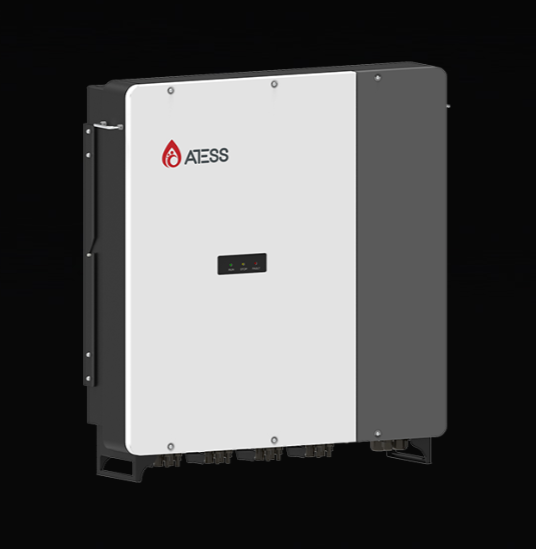
After understanding the basic role of MPPT, buyers can compare product features with actual project needs. ATESS provides the SMC200 smart MPPT controller for large-scale solar applications, where it is designed to work together with the company’s PCS and Bypass equipment.
The SMC200 includes eight MPPT channels, which gives project designers flexibility when arranging larger PV arrays. Multiple units can also operate in parallel, allowing PV capacity to be expanded according to project requirements.
Its modular design supports later PV power expansion, while the transformerless structure helps keep the equipment more compact. These characteristics can be useful in projects where available installation space and future capacity planning are both important.
The product should still be evaluated as part of the complete system. Buyers need to review array design, PCS configuration, installation conditions, and expansion requirements before deciding how many controller units are suitable.
Expansion Planning Should Start Early
PV projects often change after initial commissioning. Businesses may add more generation capacity when electricity demand increases or when additional installation space becomes available.
Controllers with modular structures can make these later changes easier to plan. Expansion still requires technical review, but the original system can be designed with future capacity in mind rather than treating growth as an unexpected modification.
Parallel operation can also support staged investment. A company may begin with the capacity needed for current demand and add controller units when the solar array grows.
For this reason, selecting a high voltage solar charge controller should involve both present operating needs and future development plans. Expansion capability is useful only when it matches the wider system architecture.
What B2B Buyers Should Review
Commercial buyers should begin with the PV array itself. Module specifications, string configuration, expected voltage range, installation environment, and future expansion plans all influence controller selection.
The next step is system compatibility. The controller needs to work correctly with the connected power conversion and energy management equipment. Clear technical communication between suppliers, engineers, and project teams helps reduce configuration problems.
Maintenance and installation also deserve attention. Modular equipment can simplify certain project tasks, while compact structures may help when installation space is limited.
ATESS positions the SMC200 as part of a larger solar and energy storage solution rather than as an isolated controller. This approach reflects how large projects are normally planned, with PV input, PCS equipment, bypass systems, and expansion requirements considered together.
A Practical View of MPPT for Large Systems
High-voltage solar controllers support larger PV projects by managing solar input and helping coordinate power flow within the wider system. MPPT adds another layer of control by adjusting operation as solar conditions change.
For project teams, the key point is not to focus on MPPT as a complicated technical concept. It is more useful to understand how tracking channels, parallel capability, modular design, and system compatibility affect practical project planning.
When these factors are reviewed together, businesses can choose controller configurations that fit current array requirements while leaving room for later development. That makes MPPT and high-voltage control practical tools for managing larger solar installations.