
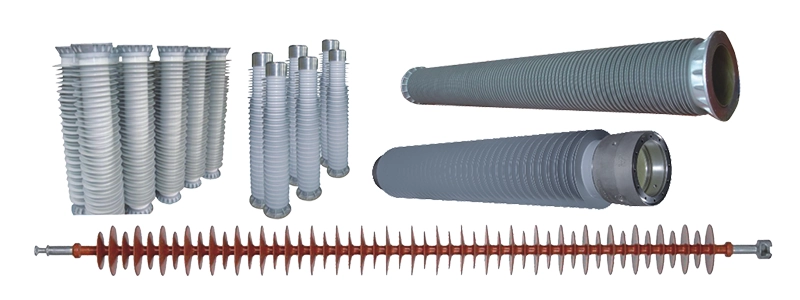
Long-rod insulators, hollow-core bushings, arresters, cable accessories, and switchgear parts present unusual production constraints. Their molds can be long and heavy, while HTV silicone requires controlled feeding, injection, heat, and curing. An HTV silicone insulators injection machine must address product geometry as well as material behavior.
The insulator making machine becomes an automation platform when mold access, clamping, thickness adjustment, material preparation, and recipe control operate in a defined sequence. This coordination reduces uncontrolled handling and gives production teams repeatable states for loading, injection, curing, opening, and removal.
Top-opening molds reduce operating height
Long insulation components can make a conventional machine exceptionally tall when the mold opens vertically through a large distance. The RT Series uses a top-opening mold structure designed to reduce overall operating height. A lower working arrangement can simplify access, factory integration, and handling around the tool.
Long products also require a handling plan for cores, inserts, demolding, and support after opening. Deflection or contact during transfer can undermine geometry even when injection and curing remain stable. Trials are required to therefore include the complete movement from loading through inspection.
Dekuma’s RT configuration provides a basis for this integrated approach, but acceptance must be tied to the intended insulator dimensions, mold zones, compound, and test criteria. That connection keeps automation focused on repeatable insulation production rather than isolated machine motions.
Dekuma configures the RT platform specifically for HTV silicone products. Product length, diameter, insert or core arrangement, mold weight, shot size, and cure requirements need to be reviewed before model and automation selection.
Reduced height does not eliminate the need for adequate service clearance. The layout must include the full opening envelope, lifting or handling equipment, utilities, guarding, and paths for mold removal. Maintenance access are expected to be examined at the design stage rather than after installation.
Automated devices also need stable reference positions. Limit switches or transducers must confirm that the mold has reached the required opening and closing states before loading or take-out begins. Clear feedback prevents equipment from entering a space that has not been safely released.
Block clamping keeps heavy molds stable
The RT clamping unit uses a block-type structure that keeps mold weight centered. This geometry supports machine stability during operation. When the mold reaches its opening limit, the block automatically locks, protecting mechanical, hydraulic, and electrical components during access and handling.
Stable support is essential for an insulator making machine because long, heavy tools can create substantial moments during movement. Alignment, guides, locks, and structural inspection is required to be included in preventive maintenance and verified after mold changes.
Hydraulic blocks adjust mold height, making changeover more accurate and efficient. Stored positions can support repeat setup, but the actual tool must still be identified and secured. Connections for heating, sensors, and auxiliary devices should follow a documented sequence with confirmation before cycling.
Mold protection should begin at low pressure and transition only after the closing path is clear. Inserts, cores, or misplaced material can otherwise damage an expensive tool. Automation should verify critical placement conditions rather than assuming completion from elapsed time.
Material preparation supports long cavity filling
The optimized plasticizing and injection system improves screw feeding, compound homogenization, and air removal. These functions help prepare solid silicone for controlled delivery into long or complex mold paths. Their effectiveness depends on approved material preparation and stable barrel conditions.
An HTV silicone insulators injection machine must supply sufficient shot volume and pressure without exposing the compound to excessive residence time or uncontrolled heat. Gate layout, venting, injection speed, and switching points should be developed through trials with the intended mold and formulation.
Air removal deserves particular attention because trapped gas can affect surface condition and internal integrity. Better degassing in the machine supports the process, while mold vents and filling strategy complete it. Inspection and application-specific testing should confirm the result.
Material batches, storage conditions, preparation time, and recipe identity should be traceable. When a defect appears, this record helps distinguish compound variation from machine, mold, temperature, or handling causes.
Control and training sustain automated output
The RT Series uses an Austrian B&R control system with a 10.4-inch color touch screen. Operators can set, store, adjust, and monitor critical parameters. Access control should protect validated recipes while allowing authorized engineers to document necessary changes.
Alarm logic must cover mold position, locking, injection, temperatures, hydraulic conditions, and connected automation. Fault recovery should identify any potentially affected part and return the system to a known safe state. Testing abnormal scenarios is a necessary part of commissioning.
Training should include normal cycles, mold change, material setup, inspection, cleaning, lubrication, and manual recovery. Preventive maintenance must cover clamping blocks, locks, guides, hydraulics, sensors, heaters, and injection components, with critical spares identified by lead time.
Automation in insulator production succeeds when the machine reflects long-part geometry and HTV silicone behavior. Top-opening access, centered clamping, hydraulic adjustment, prepared material, and protected recipes create a stable foundation. Results from different mold zones should be reviewed separately because a long component may conceal local filling or curing variation within an acceptable overall average.