
A useful technical discussion should not end when the presentation closes. Its real value appears later, when an engineering team can translate a material claim, process idea, or application case into a controlled factory experiment. That transition requires more than enthusiasm for a new manufacturing method; it calls for defined objectives, measurable variables, and a realistic understanding of production constraints.
A well-designed additive manufacturing summit can help connect those stages, while TCT Asia provides a broader setting for examining how emerging ideas move from technical discussion toward industrial practice.
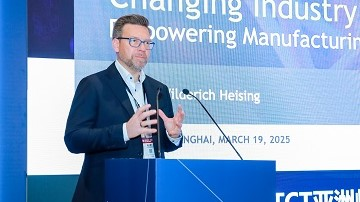
Turn Seminar Notes into Testable Questions
Technical presentations often introduce a large amount of information in a short period. Instead of recording every specification, engineering teams can separate useful insights into three categories: a problem worth solving, a technical approach worth investigating, and evidence that still needs verification. This simple distinction prevents interesting research from being treated as an immediate production solution.
The value of technical 3D printing seminars becomes clearer when discussions are linked to actual manufacturing scenarios. A presentation about a new process may raise questions about dimensional stability, surface requirements, material behavior, production volume, or downstream finishing. Those questions provide a starting point for designing a factory trial rather than simply adding another technology to an internal watchlist.
Application context matters just as much. Aerospace components, mould inserts, medical parts, and consumer products rarely share the same tolerance, material, inspection, or production requirements. A process that appears suitable in one application may require a different validation method elsewhere. Seminar information becomes more actionable when the technical principle is matched with the conditions of the intended part.
Define the Factory Trial Before Printing
A factory trial should begin with a clear question rather than an open-ended request to “test 3D printing.” The team might investigate whether a geometry can be produced with fewer manufacturing steps, whether a particular material can withstand the intended environment, or whether additive production can support a small batch without excessive secondary work. Each question points toward different measurements.
Part geometry also deserves attention before the first build. Orientation, support strategy, wall thickness, internal channels, and critical surfaces can influence both the printed result and the amount of post-processing required. A meaningful trial should identify which features matter most to the final application instead of judging the entire part through one general quality assessment.
Production conditions add another layer. Build preparation, operator intervention, inspection, cleaning, finishing, and documentation all consume resources outside the printer itself. A useful trial records these activities alongside print duration and material consumption, allowing the team to understand the actual workflow rather than evaluating the build in isolation.
Connect Research with Application Evidence
An additive manufacturing summit can broaden the technical picture by bringing different application perspectives into the same environment. TCT Shenzhen, scheduled for October 14–16, 2026, provides an opportunity to examine additive manufacturing within a South China industrial setting, where sectors such as electronics, moulding, medical technology, and consumer products create very different production challenges.
Research-focused exchanges can also help engineers identify which emerging concepts deserve closer investigation. Rather than treating academic findings as ready-made factory solutions, technical teams can ask what remains unknown: Has the method been tested at a relevant scale? Which variables have the strongest influence on results? Are the reported conditions realistic for the intended production environment?
The same mindset can improve conversations with technology providers. Instead of asking only about maximum build size or nominal resolution, teams can discuss representative parts, process monitoring, material handling, post-processing, inspection, and repeatability. Such questions reveal the practical work surrounding an additive process and make later pilot planning more precise.
Build a Path from Insight to Production
A successful factory trial needs an exit point. Before testing begins, the team should define what result would justify another experiment, what finding would require process adjustment, and what evidence would be necessary before broader production use. This prevents pilot projects from continuing indefinitely without generating a clear technical conclusion.
The structure of technical 3D printing seminars can support this process when presentations are treated as sources of hypotheses rather than finished answers. Notes from research sessions, application cases, and industry discussions can be converted into specific trial parameters, such as material selection, geometry, build conditions, inspection criteria, or post-processing requirements. The resulting test plan becomes more focused because each experiment addresses a defined uncertainty.
TCT Shenzhen also offers a useful opportunity to compare ideas across different parts of the additive manufacturing ecosystem. A team exploring production adoption may encounter discussions that connect equipment, materials, software, services, and application development. TCT Asia will continue this wider exchange through its 2027 event, scheduled for May 27–29, giving technical teams another reference point as they refine longer-term manufacturing plans.
Conclusion
The distance between a seminar insight and a factory result is rarely closed by printing one sample. Progress depends on translating technical information into questions, selecting evidence that can be measured, and designing trials around the realities of the intended application. That process gives an additive manufacturing summit a practical role beyond knowledge sharing: it can help teams identify which ideas deserve controlled investigation and what information should be collected along the way.
For engineers evaluating new additive methods, the most useful outcome may be a sharper experimental plan rather than an immediate purchasing decision. TCT Asia connects research, application knowledge, and industry discussion across its event ecosystem, while TCT Shenzhen adds a manufacturing-focused setting in which those ideas can be examined against real production contexts. Turning conference knowledge into factory action ultimately depends on disciplined testing, thoughtful measurement, and a willingness to refine assumptions as evidence accumulates.